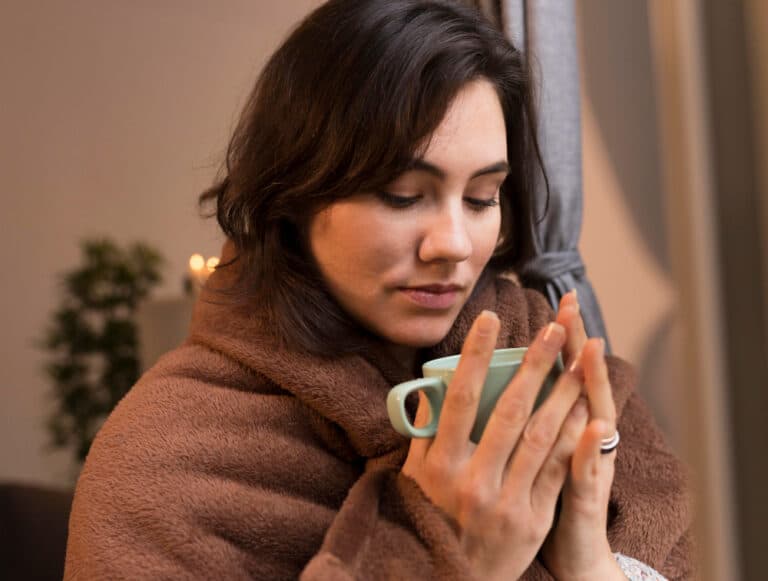
When people talk about winter and mental health, the conversation almost always centers on depression — seasonal sadness, low energy, the desire to hibernate. But there is another experience that is equally common and far less discussed: winter anxiety.
As a psychiatric nurse practitioner, I consistently see increases in anxiety symptoms during the colder months. People who rarely experience anxiety during spring or summer find themselves suddenly feeling tense, restless, or on edge as winter settles in. Racing thoughts become louder. Worry feels harder to control. Sleep becomes disrupted not by fatigue, but by a mind that will not quiet. The body feels wound tight — shoulders clenched, jaw tight, breathing shallow — without any obvious trigger.
If this sounds familiar, I want you to know something important: winter anxiety is not a reflection of weakness or a lack of resilience. It is a biologically and environmentally influenced response to real changes in light, temperature, and daily rhythm. And it is highly manageable when you understand what is driving it and how to respond.
Understanding Winter Anxiety: Why It Happens
How Reduced Light Affects the Nervous System
Much of the conversation about seasonal mental health focuses on how reduced light affects mood through serotonin and melatonin — and those pathways are relevant for anxiety as well. But winter anxiety involves an additional dimension: the impact on the autonomic nervous system, specifically the stress response.
When daylight decreases, the brain receives fewer signals that communicate safety and predictability. Light is one of the primary environmental cues your nervous system uses to orient itself — to know what time it is, to regulate alertness, and to calibrate the balance between your sympathetic nervous system (the “fight or flight” system) and your parasympathetic nervous system (the “rest and digest” system). When these signals weaken, the nervous system can default to a more vigilant, threat-sensitive state. A study published in Proceedings of the National Academy of Sciences found that seasonal changes in light exposure influence brain activity patterns associated with emotional processing and stress reactivity (Meyer et al., 2015).
This is why winter anxiety often feels physical before it feels psychological. You may notice tension in your body, a sensation of being “on edge,” or a general feeling of unease before you can even identify what you are anxious about. Your nervous system is reacting to environmental conditions, not to a specific thought or event.
Environmental and Lifestyle Triggers
Beyond light deprivation, winter introduces a constellation of external stressors that can amplify anxiety:
- Physical confinement: Cold weather naturally limits movement and time spent outdoors. When the body is sedentary, tension accumulates in the muscles and nervous system. The lack of physical release can leave you feeling restless and agitated.
- Routine disruption: Commutes feel slower, days feel shorter, evenings are longer. The internal sense of time becomes distorted, creating an underlying feeling of disorientation.
- Holiday and post-holiday pressure: Financial strain, social obligations, family dynamics, and the emotional complexity of the holiday season can all spike anxiety. January and February often bring a “crash” after the holiday intensity subsides.
- Dietary changes: Increased caffeine intake (to combat fatigue) and sugar consumption (for comfort and quick energy) can directly worsen anxiety symptoms. Caffeine stimulates the sympathetic nervous system, and sugar creates blood glucose spikes and crashes that mimic anxiety.
- Amplified inner dialogue: The quiet and stillness of winter can magnify internal thoughts. Without the distractions of outdoor activities, social plans, and longer days, anxious thought patterns often become louder and more repetitive.
Winter Anxiety vs. Seasonal Depression: Key Differences
Winter anxiety and seasonal depression frequently coexist, but they are distinct experiences that require different approaches. Understanding which one — or which combination — you are experiencing helps guide more effective treatment.
- Seasonal depression typically presents as low energy, oversleeping, withdrawal, loss of interest, heaviness, and a desire to disengage. The dominant experience is depletion.
- Winter anxiety typically presents as restlessness, racing thoughts, tension, hypervigilance, difficulty relaxing, and a sensation of being overwhelmed or “on edge.” The dominant experience is activation — the nervous system is running too hot rather than shutting down.
Many people experience both simultaneously, which can be confusing and exhausting. You might feel bone-tired but unable to sleep because your mind will not stop racing. Or you might withdraw from activities not because you lack interest, but because social situations feel overstimulating. If this resonates, you are not contradicting yourself — you are experiencing the complex interplay of two related but distinct conditions, and a provider who understands this nuance can help you develop a targeted treatment plan.
Evidence-Based Strategies to Calm Your Nervous System in Winter
The good news is that winter anxiety is highly manageable when approached with consistent, supportive practices that specifically target the nervous system. These strategies are not about “thinking your way out” of anxiety — they are about giving your body the signals it needs to recalibrate.
Use Warmth as a Regulation Tool
Warmth is one of the most underappreciated tools for managing anxiety. Heat activates the parasympathetic nervous system, signaling safety to the brain and encouraging the body to shift out of its fight-or-flight state. This is not a metaphor — it is physiology. A study published in PLOS ONE found that whole-body heating produced significant reductions in depressive symptoms and improvements in relaxation, with effects mediated through autonomic nervous system regulation (Janssen et al., 2016).
Practical applications include taking warm baths or showers, wrapping yourself in a heated blanket, holding a warm mug, wearing layers that keep your core temperature comfortable, and keeping your living space warm and inviting. These seem simple, but when your nervous system is running in overdrive, the physiological impact of warmth can be surprisingly powerful.
Gentle, Rhythmic Movement
Movement is essential for anxiety management, but the type of movement matters. High-intensity exercise can sometimes worsen anxiety by further activating the sympathetic nervous system. For winter anxiety specifically, gentle, rhythmic movement tends to be most effective because it stimulates the vagus nerve — the body’s built-in mechanism for calming the stress response.
The vagus nerve runs from the brainstem through the chest and abdomen, and it plays a central role in switching the nervous system from “fight or flight” back to “rest and digest.” Activities that involve slow, repetitive motion — walking at a steady pace, yoga, stretching, tai chi, swimming, or even rocking gently in a chair — can activate the vagus nerve and promote a state of calm. A meta-analysis published in Frontiers in Psychiatry found that yoga significantly reduces anxiety symptoms through vagal modulation and improved autonomic regulation (Cramer et al., 2018).
If going outside feels like too much, do not force it. Indoor movement — a short yoga video, gentle stretching beside your bed, pacing while listening to a podcast — is equally effective for nervous system regulation. The goal is not intensity; it is rhythm and consistency.
Breathwork: Your Fastest Tool
Controlled breathing is the fastest way to downregulate an activated nervous system because it directly influences the autonomic nervous system in real time. When you deliberately slow your exhale to be longer than your inhale, you activate the parasympathetic response and signal your brain to stand down from high alert.
Two evidence-supported techniques:
- 4-7-8 Breathing: Inhale through your nose for 4 seconds, hold for 7 seconds, exhale slowly through your mouth for 8 seconds. Repeat 3–4 cycles. The extended exhale is what drives the calming effect.
- Box Breathing: Inhale for 4 seconds, hold for 4 seconds, exhale for 4 seconds, hold for 4 seconds. This technique is used by first responders and military personnel to regulate stress in high-pressure situations.
A meta-analysis published in Scientific Reports found that structured breathwork interventions produced significant improvements in anxiety, stress, and depression symptoms across diverse populations (Fincham et al., 2023). You can practice breathwork anywhere — in bed, in your car, at your desk, during a meeting break — and it requires no equipment, no preparation, and no time commitment beyond a few minutes.
Manage Caffeine and Sugar Intake
This is a deceptively important strategy. During winter, many people increase their caffeine consumption to combat fatigue and lean more heavily on sugary foods for comfort. Both substances directly affect the nervous system in ways that can amplify anxiety. Caffeine is a central nervous system stimulant that can increase heart rate, heighten alertness, and trigger the same physiological symptoms as anxiety (racing heart, shallow breathing, restlessness). Sugar creates rapid blood glucose spikes followed by crashes that can mimic or worsen anxious feelings.
I am not suggesting you eliminate coffee or comfort food entirely — that would be unrealistic in a Minnesota winter. But being mindful of how much you consume, and noticing whether your anxiety correlates with your intake patterns, can be genuinely revelatory for many people. Consider reducing caffeine after noon, balancing sugary foods with protein and fat to stabilize blood sugar, and staying hydrated with water and herbal teas.
Social Connection as Nervous System Regulation
Like depression, anxiety can thrive in isolation. When you withdraw — which winter makes easy — your brain loses access to one of its most powerful regulatory inputs: co-regulation through safe human connection. Hearing a trusted voice, making eye contact, receiving a hug, or simply sitting in the presence of someone you feel safe with activates the social engagement system (a branch of the parasympathetic nervous system mediated by the vagus nerve).
You do not need a large social circle for this to work. One meaningful connection — a phone call with a friend, coffee with a partner, movie with a family member, a virtual check-in with someone who understands you — can interrupt an anxious spiral and remind your nervous system that you are not in danger.
Professional Support and Seasonal Medication Adjustments
For some individuals, winter anxiety benefits from professional intervention beyond lifestyle strategies. Therapy — particularly Cognitive Behavioral Therapy (CBT) — provides structured tools for recognizing and interrupting anxious thought patterns. For others, a seasonal medication adjustment may be appropriate: some clients who are well-managed on a lower dose of an anti-anxiety or antidepressant medication during warmer months benefit from a temporary increase during winter.
These are not signs of failure. They are proactive, clinically informed measures that allow you to navigate winter anxiety with resilience and stability. In my practice, I work collaboratively with clients to determine whether seasonal adjustments are appropriate, following the principle of prescribing as much as necessary but as little as possible.

Frequently Asked Questions About Winter Anxiety
Can anxiety really be seasonal?
Yes. While anxiety disorders can occur year-round, environmental factors — including reduced light exposure, disrupted circadian rhythms, physical confinement, and lifestyle changes during winter — can trigger or exacerbate anxiety symptoms in a seasonal pattern. Research supports the existence of seasonal patterns in anxiety, though it has received less clinical attention than seasonal depression (Magnusson & Partonen, 2005).
How is winter anxiety different from Generalized Anxiety Disorder (GAD)?
The key difference is the seasonal pattern. If your anxiety is significantly worse during winter months and improves as daylight increases in spring and summer, seasonal factors are likely contributing. GAD, by contrast, involves persistent, excessive worry that occurs regardless of the time of year. However, individuals with existing GAD may find their symptoms worsen during winter, and both conditions can coexist.
Should I try light therapy for anxiety?
Light therapy is primarily studied for seasonal depression, but because reduced light affects the same neurochemical systems involved in anxiety (serotonin, circadian regulation), it may also provide benefit for winter anxiety. However, the evidence is stronger for depression-specific outcomes. I recommend discussing this with your provider to determine whether light therapy makes sense as part of your individual treatment plan.
What if my anxiety gets worse despite trying these strategies?
If self-management strategies are not providing sufficient relief, that is a clear signal to seek professional support. Anxiety that interferes with your sleep, work, relationships, or daily functioning warrants clinical evaluation. Treatment options including therapy, medication, or a combination can make a meaningful difference, and starting earlier tends to produce better outcomes.
Winter Does Not Have to Mean Months of Anxiety
Winter anxiety is real, it is common, and it is treatable. The nervous system shifts that cold, dark months produce are not character flaws — they are predictable biological responses to environmental change. When you understand what is driving your anxiety and equip yourself with targeted strategies — warmth, rhythmic movement, breathwork, mindful consumption, connection, and professional support when needed — you can move through winter with greater calm and confidence.
At InnerClarity Psychiatry & Wellness, I provide personalized, holistic telepsychiatric care to individuals across Minnesota and Iowa navigating winter anxiety, seasonal depression, generalized anxiety, burnout, and a range of other mental health conditions. My approach integrates medication management, psychotherapy, lifestyle strategies, and culturally informed care because effective treatment requires addressing the whole person.
If winter anxiety has been weighing on you, you do not have to face it alone. Request a consultation at InnerClarity Psychiatry & Wellness and let’s create a plan that supports your wellbeing, restores calm, and helps you feel like yourself again.
References
Cramer, H., Lauche, R., Anheyer, D., et al. (2018). Yoga for Anxiety: A Systematic Review and Meta-Analysis of Randomized Controlled Trials. Depression and Anxiety, 35(9), 830–843.
Fincham, G. W., Strauss, C., Montero-Marin, J., et al. (2023). Effect of Breathwork on Stress and Mental Health: A Meta-Analysis of Randomised-Controlled Trials. Scientific Reports, 13, 432.
Janssen, C. W., Lowry, C. A., Mehl, M. R., et al. (2016). Whole-Body Hyperthermia for the Treatment of Major Depressive Disorder: A Randomized Clinical Trial. JAMA Psychiatry, 73(8), 789–795.
Magnusson, A. & Partonen, T. (2005). The Diagnosis, Symptomatology, and Epidemiology of Seasonal Affective Disorder. CNS Spectrums, 10(8), 625–634.
Meyer, C., Muto, V., Jaspar, M., et al. (2015). Seasonality in Human Cognitive Brain Responses. Proceedings of the National Academy of Sciences, 113(11), 3066–3071.
Disclaimer
This blog post is for educational and informational purposes only and is not intended as a substitute for professional medical advice, diagnosis, or treatment. Always consult a qualified healthcare provider with any questions you may have regarding a mental health condition. Do not disregard professional advice or delay seeking treatment based on information presented in this blog.
If you or someone you know is in crisis or experiencing thoughts of self-harm or suicide, please contact the 988 Suicide & Crisis Lifeline by calling or texting 988 (available 24/7). For immediate safety emergencies, call 911 or go to your nearest emergency room.
ABOUT THE AUTHOR

Aicha Katty, DNP, APRN, PMHNP-BC, FNP-C, is the founder of InnerClarity Psychiatry & Wellness, a telepsychiatry practice serving individuals across Minnesota and Iowa. She holds a Doctor of Nursing Practice from Winona State University and dual board certifications in psychiatric mental health and family practice.
Aicha specializes in helping individuals who experience anxiety — including seasonal anxiety patterns driven by winter’s environmental and biological stressors — find relief through evidence-based, integrative care. Her approach recognizes that anxiety is not just a psychological experience but a nervous system state, and her treatment plans reflect this by addressing the body, mind, and environment together. She is particularly passionate about helping young adults, and women who often carry anxiety silently while managing the demands of daily life.
If winter has intensified your anxiety, request a consultation at InnerClarity Psychiatry & Wellness today.