
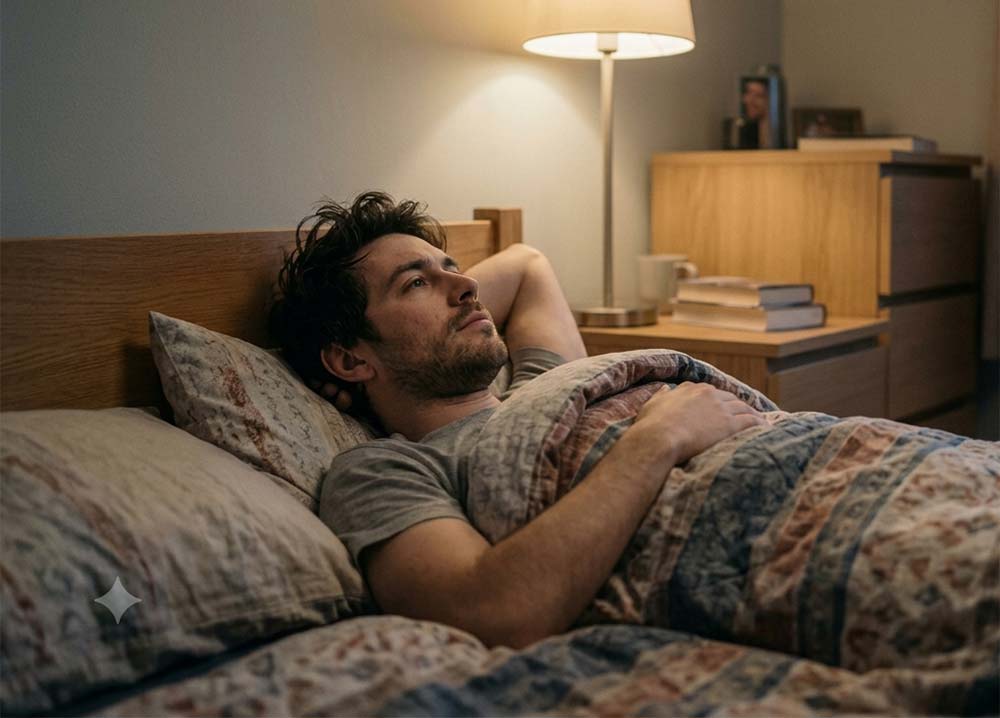
It’s 2:47 AM. You’ve been lying in the dark for over an hour. Your body is exhausted, but your mind is running — replaying conversations, rehearsing tomorrow’s to-do list, cycling through worries that feel manageable during the day but become enormous in the silence of night. When the alarm finally goes off, you drag yourself through the morning feeling like you barely slept at all. And by afternoon, the fog, irritability, and difficulty concentrating confirm what you already knew: another night of broken sleep is going to cost you.
If this pattern is familiar, you’re in significant company. The Centers for Disease Control and Prevention estimates that approximately 70 million Americans experience chronic sleep problems (CDC, 2022). But here’s what makes sleep particularly important to understand in the context of mental health: sleep disruption is both a symptom of psychiatric conditions and a driver of them. The relationship is bidirectional — depression disrupts sleep, and disrupted sleep worsens depression. Anxiety fuels insomnia, and insomnia amplifies anxiety. Treating one without addressing the other often produces incomplete results.
As a psychiatric nurse practitioner who takes a whole-person approach to care, sleep is one of the many things I assess with every client. It’s a foundational pillar — when sleep is disrupted, everything else becomes harder. Mood regulation, emotional resilience, cognitive function, physical recovery, even the effectiveness of medication — all are compromised by poor sleep. In this guide, I’ll walk you through what the research says about the sleep-mental health connection, how to recognize when sleep problems need clinical attention, and what effective treatment looks like.
The Bidirectional Relationship: Sleep and Mental Health
The traditional clinical view treated sleep problems as a symptom of psychiatric conditions — you’re depressed, so you can’t sleep. While that’s partially true, research over the past two decades has established that the relationship runs in both directions.
A landmark study published in The Lancet Psychiatry — the largest randomized controlled trial of a sleep intervention for mental health — found that treating insomnia through structured sleep interventions led to significant improvements in depression, anxiety, psychosis, and overall mental wellbeing (Freeman et al., 2017). This finding was transformative because it demonstrated that fixing sleep can directly improve psychiatric symptoms, not just the other way around.
Sleep and depression: Up to 90% of individuals with depression report sleep disturbances, including difficulty falling asleep, staying asleep, or waking too early. Conversely, chronic insomnia increases the risk of developing depression by approximately two to threefold (Baglioni et al., 2011). The relationship creates a vicious cycle — depression disrupts sleep, and disrupted sleep deepens depression.
Sleep and anxiety: Anxiety and insomnia share a particularly tight connection. The hyperarousal that characterizes anxiety — racing thoughts, physical tension, a nervous system on high alert — is fundamentally incompatible with the physiological relaxation required for sleep onset. Research published in Sleep Medicine Reviews found that insomnia is both a risk factor for and a consequence of anxiety disorders (Cox & Olatunji, 2016).
Sleep and ADHD: Sleep disorders are remarkably common in adults with ADHD, with studies estimating that 25–50% of adults with ADHD experience significant sleep problems. The cognitive effects of sleep deprivation — poor focus, reduced working memory, impaired executive function — directly overlap with and worsen ADHD symptoms.
Sleep and overall brain health: During sleep, your brain performs essential maintenance — consolidating memories, clearing metabolic waste through the glymphatic system, and restoring the neurochemical balance needed for emotional regulation the following day. When sleep is chronically insufficient or fragmented, these processes are compromised, and the cumulative effect manifests as cognitive fog, emotional reactivity, reduced stress tolerance, and impaired decision-making.

When Sleep Problems Need Clinical Attention
Not all sleep difficulties are clinical insomnia. The occasional bad night — caused by stress, caffeine, travel, or life disruptions — is a normal part of human experience. Clinical insomnia is different. According to the DSM-5-TR, insomnia disorder involves difficulty initiating or maintaining sleep, or early morning awakening, occurring at least three nights per week for at least three months, despite adequate opportunity for sleep, and causing significant distress or impairment in daily functioning (APA, 2022).
If your sleep difficulties meet these criteria — or if you notice that poor sleep is consistently affecting your mood, concentration, relationships, or daily functioning — clinical evaluation is warranted.
My Approach to Sleep at InnerClarity
In my practice, I do not treat sleep as an isolated issue. I approach it as an integral part of the mental health picture — connected to mood, anxiety, hormones, lifestyle, medication, and overall nervous system functioning.
Assessment First
Before recommending any intervention, I conduct a thorough exploration of your sleep patterns, sleep environment, daily routines, caffeine and substance use, stress levels, mental health symptoms, medication history, and any medical factors (like thyroid function or hormonal imbalances) that could be contributing to sleep disruption. Sometimes what presents as insomnia is actually a medication side effect, an unrecognized anxiety disorder, or a physiological issue that requires a different intervention than sleep hygiene alone.
Non-Medication Strategies as the Foundation
I begin with strategies that address underlying causes and naturally support healthy sleep. These may include sleep hygiene optimization (consistent wake time, dark and cool sleep environment, limited screen exposure before bed, avoiding caffeine after noon), stimulus control (retraining your brain to associate the bed with sleep rather than wakefulness), relaxation techniques (breathwork, progressive muscle relaxation, body scan meditation), and cognitive strategies to address the racing thoughts and worry patterns that keep you awake.
Research supports the effectiveness of these approaches. Cognitive Behavioral Therapy for Insomnia (CBT-I) is considered the gold-standard, first-line treatment for chronic insomnia, and a meta-analysis published in Annals of Internal Medicine found that CBT-I produces durable improvements in sleep quality that persist after treatment ends — unlike sleep medications, which typically lose effectiveness once discontinued (Mitchell et al., 2012).
Medication When Appropriate
When non-medication strategies alone are insufficient, medication may be considered as a short-term support. I approach sleep medication conservatively, selecting options with favorable safety profiles and the lowest effective doses. The goal is to break the insomnia cycle and restore a functional sleep pattern — not to create reliance on medication for sleep. If underlying depression or anxiety is driving the sleep disruption, treating the root condition often resolves the sleep problem as well.
Addressing the Whole Picture
Because sleep intersects with so many aspects of health, I also consider nutritional factors (deficiencies in magnesium, vitamin D, and B vitamins can affect sleep quality), hormonal factors (thyroid dysfunction and melatonin dysregulation), and whether current medications may be contributing to sleep disruption. Lab testing can help identify these hidden contributors.
Frequently Asked Questions About Sleep and Mental Health
Is my insomnia causing my depression, or is my depression causing my insomnia?
In most cases, the relationship runs in both directions. Depression disrupts the neurochemical and circadian systems that regulate sleep, and chronic sleep disruption impairs the brain’s ability to regulate mood. Addressing both simultaneously — rather than waiting for one to resolve before treating the other — typically produces the best outcomes.
Are sleep medications safe?
Sleep medications can be safe and helpful when used appropriately, under clinical supervision, and typically for short-term support. The concern with long-term use of certain sleep aids (particularly benzodiazepines and Z-drugs) is the potential for tolerance, dependence, and diminished effectiveness over time. In my practice, I use sleep medication judiciously and prioritize non-medication strategies as the foundation of treatment.
How much sleep do adults actually need?
The American Academy of Sleep Medicine recommends 7–9 hours per night for adults. However, the quality of sleep matters as much as the quantity. Fragmented sleep — even if the total hours look adequate — may not provide the restorative deep sleep your brain requires.
Can improving my sleep really help my anxiety or depression?
Yes. The Freeman et al. (2017) trial demonstrated that treating insomnia led to significant improvements in anxiety, depression, and overall mental wellbeing. Sleep is not a passive byproduct of mental health — it is an active contributor to it.
I’ve tried sleep hygiene tips and they don’t work. What else can I do?
Sleep hygiene is a good starting point, but it may be insufficient for clinical insomnia. A comprehensive approach that includes cognitive-behavioral strategies, assessment of underlying medical and psychiatric contributors, and — when appropriate — targeted medication or supplement support is typically more effective. If basic tips aren’t helping, clinical evaluation is the logical next step.
Sleep Is Not a Luxury — It’s a Foundation
If you’ve been dismissing your sleep problems as something you just have to live with, I want to challenge that assumption. Sleep is the foundation your brain needs to regulate mood, manage stress, process emotions, and function at its best. When sleep is chronically disrupted, everything else in your mental health picture is harder.
At InnerClarity Psychiatry & Wellness, I provide holistic, integrative telepsychiatric care to individuals across Minnesota and Iowa — and sleep assessment is woven into every treatment plan I create. Whether insomnia is your primary concern or a piece of a larger clinical picture, I approach it with the attention and depth it deserves.
If sleep problems have been affecting your mental health, request a consultation at InnerClarity Psychiatry & Wellness today.
References
American Psychiatric Association. (2022). Diagnostic and Statistical Manual of Mental Disorders (5th ed., text rev.).
Baglioni, C., Battagliese, G., Feige, B., et al. (2011). Insomnia as a Predictor of Depression: A Meta-Analytic Evaluation of Longitudinal Epidemiological Studies. Journal of Affective Disorders, 135(1–3), 10–19.
Centers for Disease Control and Prevention. (2022). Sleep and Sleep Disorders.
Cox, R. C. & Olatunji, B. O. (2016). A Systematic Review of Sleep Disturbance in Anxiety and Related Disorders. Journal of Anxiety Disorders, 37, 104–129.
Freeman, D., Sheaves, B., Goodwin, G. M., et al. (2017). The Effects of Improving Sleep on Mental Health. The Lancet Psychiatry, 4(10), 749–758.
Mitchell, M. D., Gehrman, P., Perlis, M., & Umscheid, C. A. (2012). Comparative Effectiveness of Cognitive Behavioral Therapy for Insomnia: A Systematic Review. BMC Family Practice, 13, 40.
Disclaimer
This blog post is for educational and informational purposes only and is not intended as a substitute for professional medical advice, diagnosis, or treatment. Always consult a qualified healthcare provider with any questions you may have regarding a mental health condition. Do not disregard professional advice or delay seeking treatment based on information presented in this blog.
If you or someone you know is in crisis or experiencing thoughts of self-harm or suicide, please contact the 988 Suicide & Crisis Lifeline by calling or texting 988 (available 24/7). For immediate safety emergencies, call 911 or go to your nearest emergency room.
ABOUT THE AUTHOR

Aicha Katty, DNP, APRN, PMHNP-BC, FNP-C, is the founder of InnerClarity Psychiatry & Wellness, a telepsychiatry practice serving individuals across Minnesota and Iowa. She holds a Doctor of Nursing Practice from Winona State University and dual board certifications in psychiatric mental health and family practice.
Aicha takes a whole-person approach to sleep and mental health, recognizing that sleep disruption is both a symptom and a driver of psychiatric conditions. Her assessment process looks beyond surface-level sleep complaints to identify the underlying contributors — whether psychological, physiological, hormonal, or lifestyle-related — and her treatment plans integrate non-medication strategies, targeted prescribing when appropriate, nutritional support, and lab-informed insights to restore healthy, sustainable sleep.
If insomnia or sleep disruption has been undermining your mental health, request a consultation at InnerClarity Psychiatry & Wellness today.