

Everyone worries. About work, money, relationships, health, the future. That’s part of being human. But there’s a difference between the kind of worry that shows up, gets your attention, and eventually moves on — and the kind that settles in and refuses to leave. The kind that hums in the background of everything you do, making your chest tight, your stomach unsettled, your thoughts circular, and your body exhausted from a fight it can’t name.
If the second version sounds more like your reality, what you’re experiencing may be more than stress. It may be an anxiety disorder — and specifically, it may be Generalized Anxiety Disorder (GAD), one of the most common and most underrecognized mental health conditions in adults. The Anxiety & Depression Association of America (ADAA) estimates that GAD affects approximately 6.8 million adults in the United States, yet fewer than half of those affected receive treatment (ADAA, 2023). In my practice, anxiety is one of the most frequent reasons individuals seek care — and one of the conditions where the right combination of strategies can make the most meaningful difference.
I share these numbers because I want you to understand something: if anxiety has been running your life, you are not weak, you are not dramatic, and you are not alone. As a board-certified Psychiatric Mental Health Nurse Practitioner who has also navigated anxiety and burnout during my own life, I can tell you from both clinical training and personal experience that anxiety is highly treatable — and that you do not have to accept constant worry as your normal.
In this guide, I walk you through what anxiety and GAD actually are, how they differ from everyday worry, what drives them, and the holistic strategies I use at InnerClarity Psychiatry & Wellness to help individuals across Minnesota and Iowa find relief that lasts.
What Is Anxiety, Really?
Anxiety, at its core, is your brain’s alarm system. It evolved to protect you — to detect threats, mobilize your body’s stress response, and prepare you to act. If you’ve seen Pixar’s Inside Out 2, you may recognize this instantly: Anxiety’s whole purpose in that film is to anticipate every possible threat and prepare Riley for what’s coming. That instinct exists for a reason. In the right context, anxiety is functional. It sharpens your focus before a presentation, keeps you alert in an unfamiliar situation, and motivates you to prepare for something that matters.
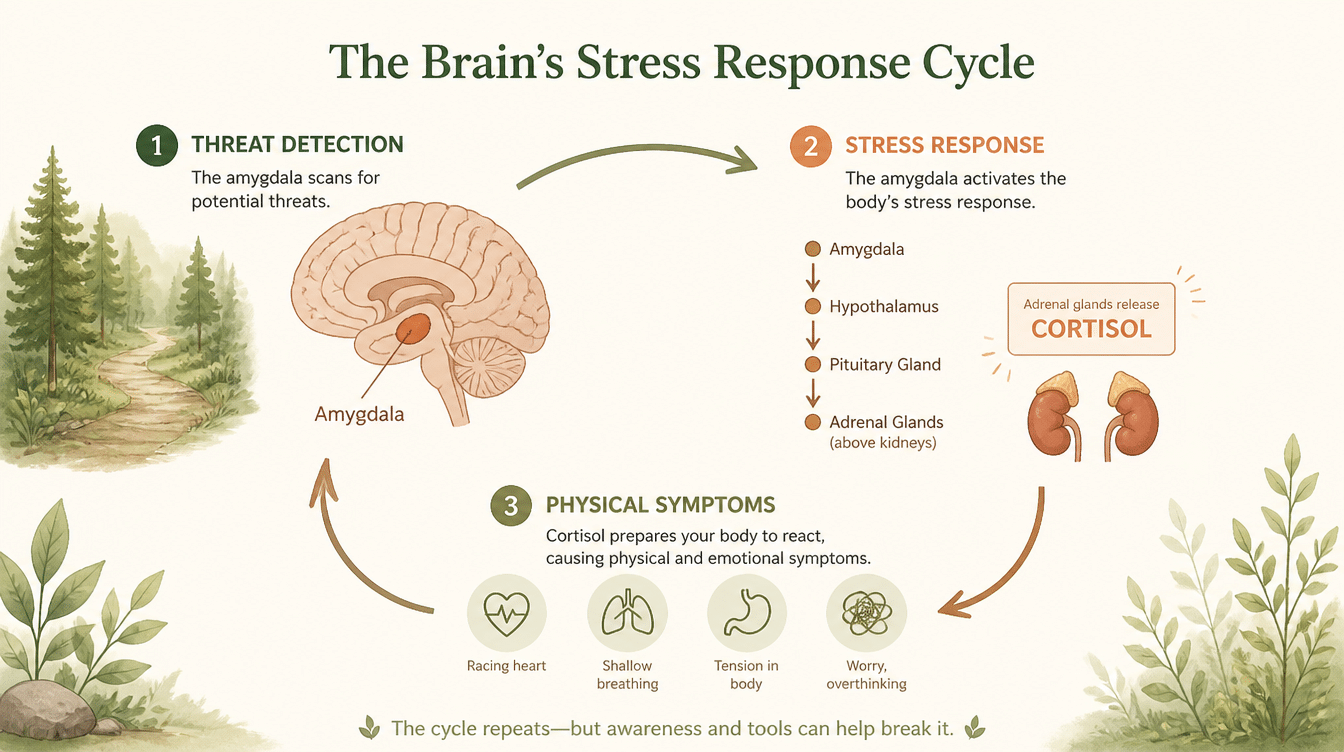
The problem occurs when that alarm system stops distinguishing between real danger and perceived threat. In Inside Out 2, we see this play out vividly — Anxiety spirals so far into “what if” thinking that she takes over completely, overwhelming Riley’s ability to function in the present. That’s an accurate picture of what happens in the brain. When your brain treats a work email, a social interaction, or an uncertain future with the same neurochemical urgency it would reserve for physical danger — flooding your body with adrenaline and cortisol when no actual threat exists — that’s when anxiety becomes a disorder rather than a normal response.
Generalized Anxiety Disorder is characterized by persistent, excessive worry about a range of everyday concerns — work, health, family, finances, daily responsibilities — that feels difficult or impossible to control. The worry is disproportionate to the actual situation, spans multiple areas of life rather than focusing on one specific fear, and persists more days than not over an extended period.
Symptoms of GAD may include a persistent sense of restlessness or feeling on edge, difficulty concentrating or a mind that goes blank at critical moments, irritability that seems out of proportion to the situation, muscle tension — particularly in the jaw, neck, shoulders, and back, sleep disruption (difficulty falling asleep, staying asleep, or waking feeling unrested), fatigue that doesn’t improve with rest, an inability to stop worrying even when you recognize the worry is excessive, and physical symptoms such as headaches, stomach upset, nausea, or a racing heart.
What makes GAD particularly draining is that it’s not tied to one specific trigger you can avoid. It’s pervasive. It shifts from topic to topic — you resolve one worry and another immediately takes its place. Many describe it as a feeling that something is wrong, even when they can’t point to what. That background hum of dread is exhausting, and over time, it erodes your confidence, your relationships, your sleep, and your sense of who you are without the anxiety.
Anxiety Is Not a Character Flaw — It’s a Brain and Body Issue
One of the most important things I want you to understand is that anxiety is not caused by overthinking, by being too sensitive, or by failing to “just relax.” It is a condition rooted in biology, shaped by experience, and maintained by patterns in the brain and nervous system that can be changed with the right support.
Research has shown that anxiety disorders involve dysregulation in several interconnected systems. The amygdala — the brain’s threat-detection center — is often hyperactive in individuals with anxiety, interpreting neutral or ambiguous stimuli as dangerous (Etkin & Wager, 2007). The prefrontal cortex, which is responsible for rational assessment and emotional regulation, may have reduced ability to override these false alarms. The hypothalamic-pituitary-adrenal (HPA) axis — your body’s central stress response system — can become chronically activated, producing elevated cortisol levels that contribute to fatigue, inflammation, sleep disruption, and cognitive difficulty.
Genetics also play a role. A meta-analysis published in Molecular Psychiatry found that anxiety disorders have a significant hereditary component, with first-degree relatives of individuals with GAD being at substantially elevated risk (Hettema et al., 2001). Environmental factors — childhood experiences, trauma, chronic stress, attachment patterns, and cultural context — interact with genetic predisposition to shape how anxiety develops and presents.
Understanding this neurobiology matters because it shifts the conversation from blame to biology. You didn’t choose this. Your brain is doing what it was wired to do — it’s just doing it too much, too often, and in response to situations that don’t warrant it. Treatment works by recalibrating these systems, not by telling you to “stop worrying.”
How Anxiety Differs from Normal Worry
This is a question I hear frequently, and it’s an important one. The line between normal worry and clinical anxiety isn’t about whether you worry — it’s about how much the worry controls your life.
Normal worry tends to be situational and proportional. You worry before a job interview, but the worry dissipates afterward. You’re concerned about a family member’s health, but you can set the concern aside and function. Normal worry responds to reassurance, resolves when the situation changes, and doesn’t significantly impair your daily life.
Clinical anxiety is persistent, disproportionate, and functionally impairing. The worry doesn’t match the situation, or it persists long after the situation has resolved. It jumps from topic to topic. It resists reassurance — even when you logically know things are fine, your body and mind refuse to believe it. And it significantly affects your ability to work, sleep, connect with others, or enjoy your life.
If you find yourself spending more time worrying than not, if the worry is affecting your sleep, your relationships, your productivity, or your physical health, and if you’ve tried to manage it on your own without lasting success — that’s when professional support makes a meaningful difference.
How I Approach Anxiety at InnerClarity
At InnerClarity Psychiatry & Wellness, I treat anxiety the same way I approach other conditions — as a whole-person concern, not just a symptom to suppress. My approach integrates multiple evidence-based strategies, tailored to your unique clinical picture, because anxiety responds best to a comprehensive plan that addresses mind, body, and lifestyle together.
Psychotherapy — Rewiring the Patterns
Psychotherapy is one of the most effective treatments for anxiety, and for many individuals with mild to moderate symptoms, it can be sufficient on its own. For moderate to severe anxiety, therapy combined with medication produces the strongest outcomes.
Cognitive Behavioral Therapy (CBT) is the most well-researched psychotherapy approach for anxiety disorders. A meta-analysis published in Psychological Bulletin found that CBT produces significant reductions in anxiety symptoms, with effects that are maintained long after treatment ends (Hofmann et al., 2012). CBT works by helping you identify the thought patterns — catastrophizing, overestimating threat, underestimating your ability to cope — that fuel the anxiety cycle, and replacing them with more balanced, evidence-based perspectives.
At InnerClarity, I incorporate elements of CBT and supportive therapy into our visits. I provide a safe, non-judgmental space where you can explore what’s driving your anxiety, build practical coping strategies, and develop the emotional resilience to navigate uncertainty without spiraling. For a lot of clients, the relief starts well before any strategy “works” — it starts the moment they realize someone is actually tracking with what they’re describing, instead of rushing past it toward a solution.
That said, the therapeutic work we do together is woven into your medication management visits; and while that work is meaningful, for most of my clients managing anxiety, I recommend working with an independent therapist in addition to our work at InnerClarity. A therapist can offer the frequency, depth, and continuity of therapeutic support that complements and deepens the work we do together. If you don’t currently have a therapist, resources like Psychology Today’s therapist directory and Minnesota’s Fast-Tracker platform can help you find one who is accepting new patients in your area.
Medication Management — When Your Brain Needs Support
For many individuals with moderate to severe anxiety, medication is an important component of treatment. Medications — particularly SSRIs and SNRIs — are considered first-line pharmacological treatment for GAD. These medications work by modulating neurotransmitter activity in the brain, gradually reducing the baseline level of anxiety and making it easier to engage in therapy, implement lifestyle changes, and function in daily life.
My prescribing philosophy remains the same for anxiety as for other conditions: as much as necessary, but as little as possible. I start at the lowest effective dose, monitor closely for both benefit and side effects, and adjust collaboratively based on your actual experience. Medication is a tool — not a crutch and not a cure — and it works best when integrated with other strategies that build long-term resilience.
Long-term prescribing and management of benzodiazepines is not something I offer at InnerClarity. If your anxiety symptoms are severe enough that this class of medication seems necessary, that’s an important conversation to have together — I’ll walk through the tradeoffs honestly and, if appropriate, connect you with a provider equipped to manage that piece of your care. My focus stays on building a treatment plan that’s sustainable for the long run, not just effective in the short term.
It is also important to set realistic expectations about timing — most anti-anxiety medications take a few weeks to show their full effect, and the first one prescribed is not always the one that ends up being right. Adjustments along the way are a normal, expected part of the process rather than a sign that something has gone wrong. Patience, close monitoring, and open communication between you and your provider are what make medication management successful.
Lifestyle Modifications — The Foundation Your Nervous System Needs
Your daily habits directly influence your anxiety levels — sometimes more than you realize. When I work with clients, lifestyle assessment is part of every treatment plan.
Movement: Physical activity is one of the most potent anti-anxiety interventions available. Exercise reduces cortisol, increases endorphins, and promotes neuroplasticity. A meta-analysis published in JAMA Psychiatry found that physical activity significantly reduces anxiety symptoms across populations, with moderate-intensity exercise showing the strongest effects (Stubbs et al., 2017). You don’t need a gym membership — consistent walking, stretching, or any movement that feels sustainable makes a measurable difference.
Sleep: Poor sleep and anxiety feed each other in a loop that’s hard to break on your own — a racing mind keeps you up, and the exhaustion that follows leaves your nervous system even less equipped to handle the next day’s stressors. Research published in Nature Human Behaviour found that even one night of sleep loss can increase anxiety levels by up to 30% (Ben Simon & Walker, 2020). If sleep disruption is a significant piece of your anxiety, I cover this connection in much more depth in my blog on sleep and mental health — but the short version is that protecting your sleep is rarely optional when anxiety is involved; it’s foundational.
Nutrition: What you eat affects how your brain manages stress. Blood sugar instability (from high-sugar, low-fiber meals) can mimic and amplify anxiety symptoms. Caffeine — which many anxious individuals rely on to counteract anxiety-driven fatigue — activates the same physiological pathways as the stress response and can directly worsen symptoms. At InnerClarity, I may recommend lab testing to assess nutritional deficiencies (vitamin D, B12, magnesium, iron, and other key micronutrients) that can contribute to anxiety, and provide evidence-based supplement support when appropriate.
Stress reduction: Anxiety often coexists with a lifestyle that provides insufficient recovery. Rebuilding boundaries, creating space for rest, and learning to tolerate doing less are all critical components of anxiety management — though they are often the hardest to implement, because anxiety tells you that stopping means something bad will happen.
Mindfulness and Relaxation — Interrupting the Loop
Anxiety lives in the future. It’s the ‘what if’ machine — projecting worst-case scenarios and rehearsing catastrophes that may not happen. If Inside Out 2 resonated with you, you watched this play out in real time: Anxiety rarely stops to ask what is happening right now — she’s always three steps ahead into what could go wrong. Mindfulness practices are specifically designed to interrupt this cycle by bringing your attention back to the present moment.
Mindfulness-Based Stress Reduction (MBSR) has been shown to significantly reduce anxiety symptoms. A meta-analysis published in Clinical Psychology Review found that mindfulness-based interventions produce moderate-to-large effects on anxiety across clinical and non-clinical populations (Khoury et al., 2013).
Practical techniques that can be effective include deep breathing exercises (such as the 4-7-8 technique) that activate the parasympathetic nervous system and can reduce acute anxiety within minutes, progressive muscle relaxation to release the chronic physical tension that accompanies anxiety, guided meditation (even 5–10 minutes daily can build your capacity for present-moment awareness), and grounding exercises that reconnect you with your body and surroundings when anxiety feels overwhelming.
The key is consistency, not perfection. Small daily practices build the neurological capacity for calm over time.
Lab Testing and Integrative Support
Sometimes anxiety has a partly physical driver that goes undetected. Thyroid dysfunction, vitamin D deficiency, iron deficiency, hormonal imbalances, and chronic inflammation can all produce or worsen anxiety symptoms. As a dual-certified psychiatric and family nurse practitioner, I’m uniquely positioned to assess both the mental and physical dimensions of your anxiety.
When clinically appropriate, I recommend targeted lab testing and may suggest evidence-based supplements — chosen specifically to address what your individual labs and symptoms reveal — to support your body’s natural stress regulation.

Putting It All Together: A Holistic Treatment Plan
No single strategy manages anxiety in isolation. The most effective approach combines multiple strategies tailored to your unique needs, preferences, and circumstances. In my practice, I work collaboratively with each client to build a personalized plan that may integrate supportive therapy, medication as appropriate, lifestyle modifications, mindfulness practices, lab testing, and psychoeducation to help you understand your own nervous system and become an active participant in your healing.
This is what I mean by holistic care: we look at the whole picture. How are you sleeping? What does your caffeine intake look like? Are you getting movement? Is there unresolved stress, grief, or burnout underneath the anxiety? Are there nutritional or hormonal factors contributing? Are medications helping, or do they need adjustment? Do cultural or family dynamics shape how you experience and cope with anxiety?
These questions guide the care I provide, because anxiety is not a one-size-fits-all condition, and treatment should not be either.
Frequently Asked Questions About Anxiety
What’s the difference between anxiety and an anxiety disorder?
Everyone experiences anxiety — it’s a normal human emotion. An anxiety disorder is diagnosed when the worry becomes persistent, disproportionate to the situation, difficult to control, and significantly impairs your ability to function in daily life. If anxiety is affecting your sleep, work, relationships, or physical health on a regular basis, clinical evaluation is recommended.
Can anxiety cause physical symptoms?
Yes, and this is one of the most misunderstood aspects of anxiety. Chronic anxiety can produce headaches, muscle tension, stomach problems, chest tightness, fatigue, dizziness, and a racing heart. Many individuals seek medical evaluation for these physical symptoms before recognizing that anxiety is the underlying driver. As a dual-certified psychiatric and family nurse practitioner, I assess both the physical and mental health dimensions of your symptoms.
How long does anxiety treatment take?
This varies by individual and depends on the severity of your symptoms, your treatment plan, and how your body responds to medication. From a medication standpoint, most people begin to notice meaningful improvement within 4–8 weeks of starting the right medication, though finding the optimal medication and dose sometimes takes longer. Lifestyle changes and any supportive therapeutic work we incorporate into sessions build benefit gradually over time. Many individuals experience significant improvement within the first 2–3 months of consistent treatment — and for some, that improvement continues to deepen beyond that point. The goal at InnerClarity is not just short-term symptom relief but a sustainable reduction in anxiety that holds over time.
Is anxiety curable?
Anxiety is highly treatable, and many individuals achieve significant or full remission of symptoms. For some, anxiety may be a recurring vulnerability that benefits from ongoing management strategies — similar to how someone prone to back problems continues core-strengthening exercises even after the pain resolves. The goal is not to eliminate all anxiety (which would be neither possible nor desirable) but to reduce it to a level where it no longer controls your life.
Do you prescribe benzodiazepines for anxiety?
My practice focuses on non-controlled medication options as a first-line approach for anxiety. I do not manage anxiety with benzodiazepines. If your clinical situation requires consideration of these medications, I will discuss options with you and, when appropriate, coordinate with or refer to providers who can offer additional support. My goal is to find the safest, most sustainable treatment path for your individual needs.
What makes telepsychiatry effective for anxiety treatment?
Telepsychiatry removes common barriers to care — transportation, scheduling constraints, geographic limitations — and allows you to receive treatment from an environment where you feel comfortable and safe. For many individuals with anxiety, the ability to attend appointments from home actually reduces the anxiety associated with seeking care in the first place. Research has consistently shown that telepsychiatry is as effective as in-person care for anxiety and related conditions (Hilty et al., 2013).
You Do Not Have to Live in a State of Constant Worry
If anxiety has been running your life — stealing your sleep, exhausting your body, shrinking your world, and convincing you that calm is something other people get to feel — I want you to know that relief is possible. Not just temporary relief, but the kind that comes from understanding what’s driving your anxiety, addressing it at every level, and building the skills and support to manage it for the long term.
At InnerClarity Psychiatry & Wellness, I provide personalized, holistic telepsychiatric care for individuals across Minnesota and Iowa struggling with anxiety, depression, burnout, and related conditions. From the first conversation, my goal is to understand what’s actually driving your anxiety — not just label it and move on — so the plan we build together addresses the real picture, not just the surface symptoms.
Take the first step. Request a consultation today and let’s build a path toward clarity, calm, and confidence.
References
Anxiety & Depression Association of America. (2023). Generalized Anxiety Disorder (GAD): Facts & Statistics.
Ben Simon, E. & Walker, M. P. (2020). Overanxious and Underslept. Nature Human Behaviour, 4, 100–110.
Etkin, A. & Wager, T. D. (2007). Functional Neuroimaging of Anxiety: A Meta-Analysis of Emotional Processing in PTSD, Social Anxiety Disorder, and Specific Phobia. American Journal of Psychiatry, 164(10), 1476–1488.
Hettema, J. M., Neale, M. C., & Kendler, K. S. (2001). A Review and Meta-Analysis of the Genetic Epidemiology of Anxiety Disorders. American Journal of Psychiatry, 158(10), 1568–1578.
Hilty, D. M., Ferrer, D. C., Parish, M. B., et al. (2013). The Effectiveness of Telemental Health: A 2013 Review. Telemedicine and e-Health, 19(6), 444–454.
Hofmann, S. G., Asnaani, A., Vonk, I. J., et al. (2012). The Efficacy of Cognitive Behavioral Therapy: A Review of Meta-Analyses. Cognitive Therapy and Research, 36(5), 427–440.
Khoury, B., Lecomte, T., Fortin, G., et al. (2013). Mindfulness-Based Therapy: A Comprehensive Meta-Analysis. Clinical Psychology Review, 33(6), 763–771.
Stubbs, B., Vancampfort, D., Rosenbaum, S., et al. (2017). An Examination of the Anxiolytic Effects of Exercise for People with Anxiety and Stress-Related Disorders. Psychiatry Research, 249, 102–108.
Disclaimer
This blog post is for educational and informational purposes only and is not intended as a substitute for professional medical advice, diagnosis, or treatment. Always consult a qualified healthcare provider with any questions you may have regarding a mental health condition. Do not disregard professional advice or delay seeking treatment based on information presented in this blog.
If you or someone you know is in crisis or experiencing thoughts of self-harm or suicide, please contact the 988 Suicide & Crisis Lifeline by calling or texting 988 (available 24/7). For immediate safety emergencies, call 911 or go to your nearest emergency room.
ABOUT THE AUTHOR

Aicha Katty, DNP, APRN, PMHNP-BC, FNP-C, is the founder of InnerClarity Psychiatry & Wellness, a telepsychiatry practice serving individuals across Minnesota and Iowa. She holds a Doctor of Nursing Practice from Winona State University and dual board certifications in psychiatric mental health and family practice.
Anxiety is one of the most common conditions Aicha treats in her practice, particularly among young adults and women navigating the intersection of professional demands, personal responsibilities, and the internal pressure to hold it all together. Her approach integrates evidence-based medication management, supportive therapy, lifestyle optimization, lab-informed insights, and culturally sensitive care — because she believes that sustainable relief requires treating the whole person, not just the worry. Having personally navigated anxiety and burnout during her own journey, Aicha brings both clinical expertise and genuine empathy to her care.
If anxiety has been controlling your life, request a consultation at InnerClarity Psychiatry & Wellness today.